

PRODUCT RANGE CAPACITY
PIR FOAM
PUF SUPPORT
Types: Foam support
Density:120kg/m³ – 140kg/m³ – 160kg/m³
200kg/m³ – 220kg/m³ – 320kg/m³ – 500kg/m³
Types: PIR Block, Pipes, Valve, Elbow, Sheet…
Density: 40-55kg/m³
PIR INSULATION PRODUCT
Technical Specs
- Material: Polyisocyanurate (PIR), rigid closed-cell, CFC-free.
- Service Temperature: -170°C to +150°C.
- Standard: ASTM C591 Type II.
- Typical thermal conductivity (λ): approx. 0.022–0.026 W/m·K (depending on the mean test temperature).
- Linear dimensional stability at −30 °C (ASTM D2126): < 2 %.
- Water absorption (ASTM C272): < 2 % v/v -> low, the closed-cell structure helps limit moisture transmission and the risk of corrosion under insulation (CUI).
- Compressive strength: approx. 120–250 kPa (depending on orientation and material grade).
- Density & Compressive Strength: available in various ranges to meet different project requirements.
Applications
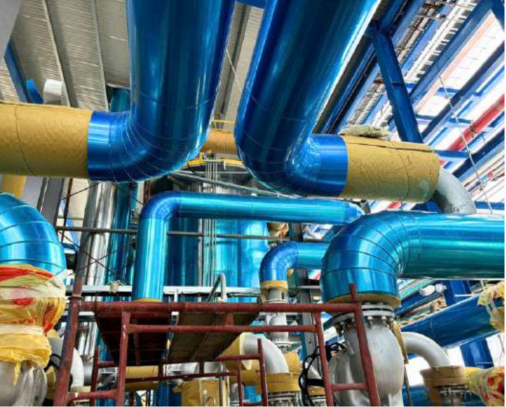
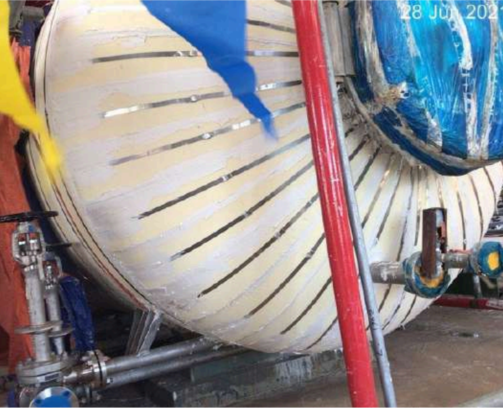
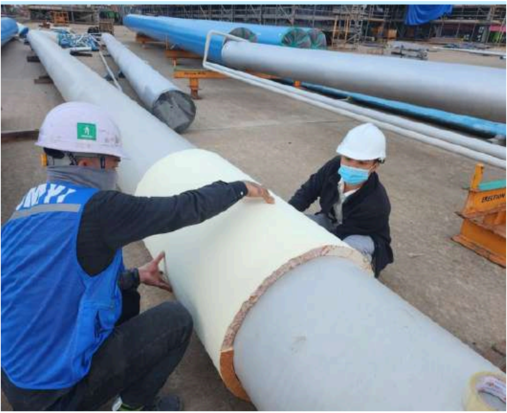
- Insulation for tanks, vessels, equipment, and pipelines.
- Refrigeration and cryogenic systems (LNG, oil & gas, refinery).
- Chilled water pipes and ducts, HVAC, refrigerated containers.
- Cold storage and food processing facilities.
Key Benefits
- Excellent dimensional stability across a wide temperature range.
- Low thermal conductivity → energy savings.
- Lightweight, easy to handle and install.
- High moisture resistance, prevents mold and corrosion.
- Compatible with a wide range of adhesives and coatings.
Key Features
- Superior thermal performance: reduces heat transfer and saves energy.
- Enhanced fire resistance: safer than many other insulation materials.
- High mechanical strength: excellent flexural and compressive strength.
- Long-term dimensional stability: reliable under deep cryogenic conditions.
HD PUF SUPPORT – COLD SHOE SOLUTIONS
Technical Specs
- Material: High-Density Polyurethane Foam (PUF), rigid closed-cell, protective rigid coverings.
- PUF SUPPORT Density: 200–500 kg/m³ (higher than standard foams).
- Service Temperature: -190°C to +120°C
- Compressive strength (kPa): ≥ 2,000 (ASTM D1621 Standard).
- Thermal conductivity λ (W/m·K at 10 °C): ≤ 0.038 (ASTM C518 Standard) -> prevents direct heat transfer, reduces heat loss
- Water absorption: ≤ 2 % v/v (ASTM C272 Standard).
- Available insulation thicknesses: 20 – 100 mm
- Load-Bearing Capacity: 2,000–6,200 kPa (resistant to compression, vibration, and mechanical stress).
- Safe & Non-Toxic.
Key Properties:
-
- Excellent thermal insulation performance
- High compressive strength for heavy loads
- Long-term durability and deformation resistance
- Moisture-resistant, reliable in cryogenic conditions
Applications: Pipelines, tanks, vessels, equipment (LNG, petrochemical, refrigeration)
Benefits
- Long Service Life: Durable, low-maintenance.
- Adaptability: Suitable for cryogenic, cold, and low-temperature tank insulation applications.
ROCK WOOL (STONE WOOL)
Key benefits for tanks
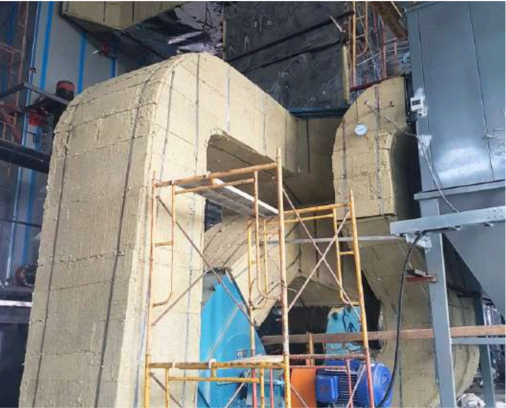
- Non-combustible mineral wool (EN 13501 A1); melting/burning point > 1,000 °C → strong passive fire protection.
- Moisture and Water Resistant, low water absorption (< 1 kg/m²) and low water-vapor sorption (≤ 1 %) → mitigates moisture-driven CUI.
- Chemically inert & durable; corrosion-tested per ASTM C795/C871 and C692; conforms to curved shells; compatible with aluminum/stainless
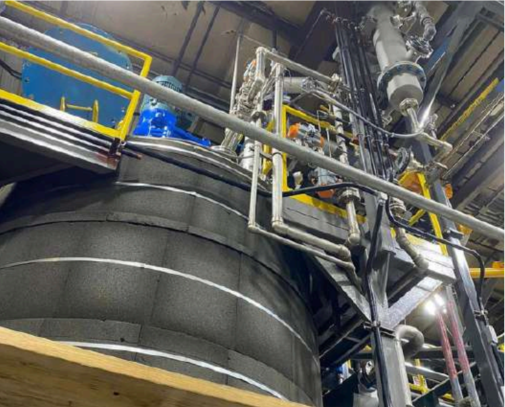
- Suitable for tanks/vessels up to 650 °C service temperature, ideal for Digester applications
- long lifetime of the insulation
Technical Spec
- Density (kg/m³): 80–175.
- Thickness (mm): 25–150 (use multilayer build-up when total thickness > 100 mm).
- Typical dimensions: Sheets 600 × 1200 mm; rolls 600 mm wide, 3–5 m long.
- Max service temperature: 650 °C; linear shrinkage ≤ 2 % at rating; ASTM E84: FSI = 0, SDI = 5.
- Thermal conductivity λ (W/m·K): 0.036 – 0.105, typical by mean temperature: 23 – 371 °C.
- Moisture performance: Water-repellent; water absorption < 1 kg/m²; water-vapour sorption ≤ 1 %.
- Fire & corrosion: Non-combustible A1, melting/burning point > 1,000 °C; CUI evaluated per ASTM C795/C871 and ASTM C692 (stainless steel).
CERAMIC FIBER
Key benefits for Tank Insulation
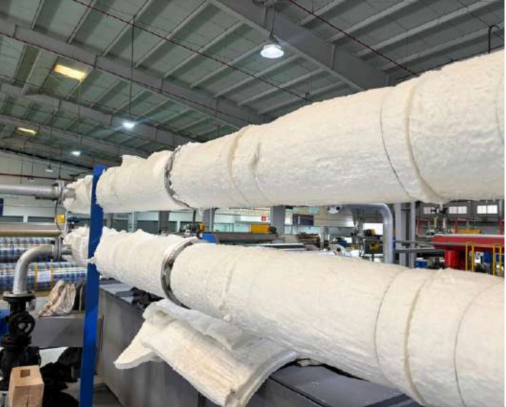
- Fireproof / non-combustible; suitable where fire hazards are a concern.
- Handles rapid temperature changes without cracking (thermal shock resistant).
- Resistant to most chemicals, acids, and alkalis—good durability in harsh atmospheres.
- Flexible blankets conform to curved surfaces; lightweight and easy to handle.
- Suitable for tanks and vessels operating from ambient up to very high temperatures
Technical Spec
- Composition: Alumina-silica ceramic fiber blanket
- Standard: ASTM C892
- Max service temperature: 1260-1430 °C (grade-dependent).
- working temperature: ≈1050–1350 °C.
- Density: 96–128 kg/m³.
- Available thickness: 20–50 mm (layer to meet heat-loss targets).
- Thermal conductivity λ (W/m·K), typical ranges by mean temperature:
• 200 °C: <0.06–0.09
• 500 °C: <0.11–0.15
• 600 °C: <0.21–0.27
• 800 °C: <0.24–0.44
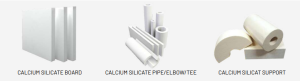
CALCIUM SILICAT INSULATION: MAXIMUM WORKING TEMPERATURE: 800°C – 1,000°C
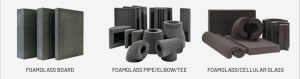
FOAMGLASS/ CELLULAR GLASS: WORKING TEMPERATURE RANGE: -200°C TO 450°C
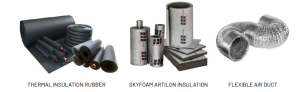
THERMAL INSULATION RUBBER
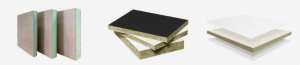
KZI XPS 150/200/250

KZI XPS 300/HD AND FOAM CEILING PANELS

KZI BOARD INSULATION PANEL – KZI ACOUSTIC CEILING
Roof and Sidewall Styles
Reliable Warranty & Ongoing Support
All KZI Enterprises systems come with a one-year warranty for your peace of mind. More than that, our team stays connected with you—checking in after installation and providing support throughout the warranty period.